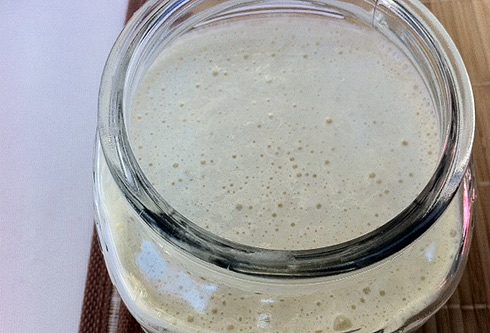
Dhanaanis is a traditional sourdough starter; it is the true heart of great Lahooh Somali crumpet-like flatbread batter. It is what gives sourdough Lahooh its characteristic tangy, distinct flavor. Sourdough starters differ from kitchen to kitchen depending on the types of grains used; it can be made using a mix of whole wheat, sorghum, barley, corn, or rice flour and so on. Once your sourdough starter is bubbling, you can use it to bake a wide variety of delicious breads, including Ethiopian Injera, sourdough pancakes, artisan French bread, and more.
Print
Somali Sourdough Starter: Dhanaanis
Sourdough starter: Dhanaanis you can use this for variety of delicious breads
Ingredients
- Equipment & Ingredients
- Flour: All-purpose flour unbleached preferred, whole wheat, sorghum, or your choice of grain flour.
- Water: Warm water filtered .
- Container: A clean glass jar or container .
- Environment: A warm draft-free place in your kitchen to keep the batter.
Instructions
Day 1: The Beginning
- In your clean jar, mix ½ cup of flour with ¼ cup of warm water. Stir thoroughly until it forms a thick paste. Cover the jar loosely (so gases can escape) and let it sit undisturbed on the counter at room temperature for 24 hours.
Day 2: First Feeding
- By now, you might see a few tiny bubbles, but don’t worry if your batter hasn't developed any yet—this is completely normal for stage two. Add ½ cup of flour and ¼ cup of warm water directly to the jar. Stir until well combined, cover loosely, and let it sit for another 24 hours.
Day 3: Spotting Life
- Your starter should now show visible signs of life with light air pockets and bubbles. This is a great sign! Take out about half of your batter (you can use it for discard recipes or throw it away). To the remaining batter in the jar, mix in ½ cup of flour and ¼ cup of warm water. Leave it on the counter for another 24 hours.
Day 4: Growing Strong
- The starter should now be doubling or tripling in size with plenty of active bubbles. Once again, discard half of the batter. Feed the remaining starter with ½ cup of flour and ¼ cup of warm water. Mix well, cover loosely, and let it rest for its final 24 hours.
Day 5: Ready to Bake
- Your Dhanaanis starter should now be beautifully active, highly bubbly, and doubled in volume. This means your starter is fully mature and you are officially ready to make authentic Sourdough Lahooh!
Maintaining & Feeding Your Starter
- If you plan on making Lahooh every single day, simply measure out and remove the amount of starter you need for your baking recipe. Always make sure to leave a little bit of starter behind at the bottom of the jar. Add fresh flour and water to that remaining base, mix well, and let it sit on the counter to ferment for the next day's bake.
For Weekly or Occasional Use (The Fridge Method):
- If you do not have time to bake daily, you can store your starter in the refrigerator to slow down its fermentation.
- Place your loosely covered jar in the fridge, where it can safely sit forgotten for a week or two.
- Over time, a dark liquid may form on top. When you are ready to use the starter again, bring the jar back out to room temperature. You can either stir this liquid back into the batter for extra tang, or simply pour it out.
- Feed the starter with fresh flour and water, then let it rest on the counter until it becomes bubbly and active again.
- Take what you need for your current baking recipe, feed the leftover starter one more time, and pop it right back into the fridge until next time!



Is there a specific type of flour or mix of flours you would recommend if I’m trying to make Ethiopian Injera bread? Thanks.
Insha Allah I will post a recipe for the Ethiopian injera, you can use combinations of these flours;
teff, corn, sorghum, whole wheat, plain etc.
Salamu alaykum
Thanks for the recipe. Should the jar be closed while it is resting over the day, or should it be left open? Also, in Europe at this time, there is no warm areas in the house – how warm is necessary and do you have any recommendations to keep the jar warm?
Thank you!
Asalamu Alaikum,
Use a container lightly covered so the air can get in, the best place to keep your starter would be in the oven, if you leave the oven light would be a plus, I usually leave it on and it works.
First few times my starter didn’t come out, I started from scratch the third time I got it right, so don’t give up.
I hope this answers your question.
Hi sis thank you for all this work , Is this the base fpr canjeero because I remmember my mom doing this and then using it over and over for canjeero.
Thanks! This gives me some inspiration to try again, hehe!
it looks very yummy……….
Thanks
Thank you so much for this starter recipe! I’m trying to make injera in Australia, and as we don’t have access to great teff, I’veade my starter with a combination of teff and then regular feedings of wheat flour. Would you be able to tell me the right ratio of flour, water, starter to make injera? I’m planning on using sorjhoum flour as its gluten free. Thanks again for this starter! Works a treat!
Many thanks for trying the recipe I am glad it worked for you, to make the injera 1 cup flour to 3 ½ cups lukewarm water, would make a thin batter once you are familiar with this consistency then add your starter and adjust the batter adding more flour or water.
All the best,
Very nice and organized site. Well explained. Thank you
Thanks, Aisha